The logistics and maritime industries are in the midst of a radical transformation, driven by incredible technological advancements. It’s a truly exciting time to be involved, witnessing how everything from AI and automation to real-time data analytics is reshaping global supply chains, making them faster, safer, and far more efficient.
I’ve seen firsthand how these innovations are moving beyond just buzzwords, actively solving critical challenges like port congestion, labor shortages, and the pressing need for greater sustainability.
Imagine ships navigating autonomously or warehouses where robots and humans seamlessly collaborate to optimize every single process. The future of how goods move across oceans and continents hinges on smarter information management and cutting-edge maritime solutions.
This isn’t just about reducing costs; it’s about building resilience and transparency into systems that touch every aspect of our global economy. From enhancing operational efficiency with predictive maintenance and optimized routes to adopting green technologies and robust cybersecurity measures, the landscape is evolving at an astonishing pace.
It’s truly fascinating to observe how these shifts are not only changing the industry but empowering businesses and improving customer experiences worldwide.
Let’s dive deeper and uncover exactly how these groundbreaking changes are redefining logistics as we know it!
Revolutionizing Port Operations with Smart Technology
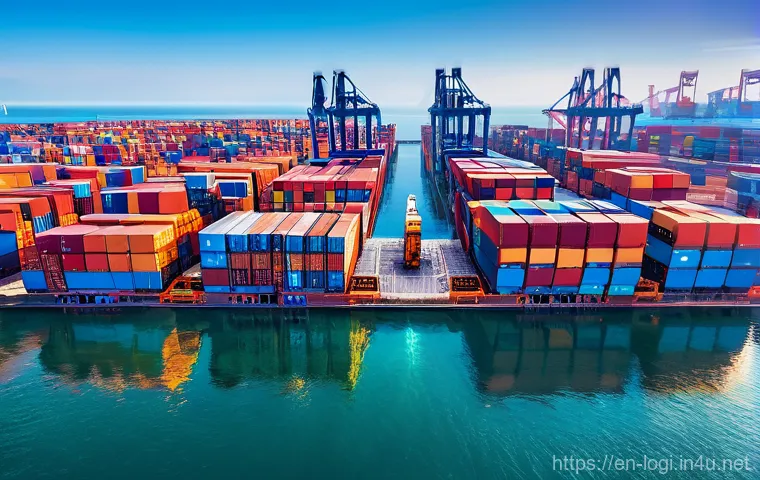
It’s truly incredible to witness how ports, the bustling gateways of global trade, are transforming right before our eyes. For years, we’ve talked about efficiency, but now, with smart technology, we’re seeing an unprecedented leap forward.
I’ve personally visited terminals that are no longer just vast spaces for loading and unloading; they’re becoming high-tech hubs, driven by automation and sophisticated data systems.
It feels like science fiction is turning into reality, with every piece of cargo, every crane movement, and every vessel entry being meticulously orchestrated by intelligent systems.
This shift isn’t just about speed, though that’s a huge benefit. It’s about enhancing safety, drastically reducing human error, and creating a smoother, more predictable flow for goods that touch every corner of our lives.
From reducing congestion to enabling faster turnaround times, the impact is undeniable, making our supply chains far more reliable and responsive to the unpredictable nature of global events.
The energy and innovation in these spaces are truly palpable, showcasing a future where efficiency is paramount.
Autonomous Vessels and Port Automation: A Game Changer
Imagine ships that navigate themselves, making decisions based on real-time data to optimize routes and avoid hazards. This isn’t just a dream; autonomous shipping is rapidly advancing, with global organizations like the IMO working on frameworks for Maritime Autonomous Surface Ships (MASS) that we expect to see finalized and adopted by 2026, with significant developments happening in 2025.
In my opinion, the safety benefits alone are transformative, reducing human fatigue and minimizing risks in challenging conditions. On shore, port automation, including automated cranes and robotic handling systems, is already streamlining operations.
When I first saw these massive, intelligent machines working in sync, it was clear that manual processes just can’t compete. They handle cargo with incredible precision and speed, operating 24/7, which dramatically improves throughput and reduces the bottlenecks that have plagued ports for decades.
This isn’t about replacing people entirely, but rather about creating a more efficient ecosystem where dangerous, repetitive tasks are handled by machines, freeing up the human workforce for more complex, supervisory roles.
The implications for reducing dwell times and getting goods to consumers faster are huge.
The Digital Twin Revolutionizing Terminal Management
One technology that has genuinely fascinated me is the “digital twin.” Think of it as a living, breathing virtual replica of an entire port terminal or even a single vessel.
This isn’t just a fancy simulation; it’s a dynamic model fed by real-time data from countless sensors, allowing operators to monitor everything from equipment wear and tear to energy consumption and cargo flow.
It’s like having X-ray vision into every aspect of operations. I’ve spoken with port managers who swear by it for predictive maintenance, telling me how they can anticipate potential breakdowns before they happen, scheduling repairs proactively rather than reactively.
This prevents costly downtime and keeps the goods moving. Beyond maintenance, digital twins are invaluable for simulating different operational scenarios, helping management optimize layouts, experiment with new processes, and even train staff in a risk-free virtual environment.
It truly feels like the ultimate planning tool, giving managers an unprecedented level of insight to make smarter, faster decisions.
AI and Machine Learning: The Brains Behind Modern Logistics
It’s hard to talk about the future of logistics without immediately diving into Artificial Intelligence and Machine Learning. These aren’t just buzzwords; they’re the intellectual powerhouse driving an incredible evolution in how our goods move around the world.
I remember when “data analysis” meant sifting through spreadsheets for hours, but now, AI is processing vast amounts of information in mere seconds, revealing patterns and insights that were once impossible to detect.
It’s truly like giving our supply chains a super-brain, allowing them to anticipate, adapt, and operate with a level of precision we could only dream of before.
From predicting consumer demand with uncanny accuracy to optimizing every leg of a journey, AI is making our global trade networks smarter, more efficient, and incredibly resilient.
This technology isn’t just about incremental improvements; it’s about fundamentally rethinking how we manage complex systems and empowering businesses to make decisions that truly matter, impacting everything from cost savings to environmental footprints.
Predictive Analytics for Supply Chain Resilience
One of the areas where AI truly shines, in my experience, is in predictive analytics. In a world full of unexpected disruptions, from geopolitical events to sudden shifts in consumer demand, being able to anticipate what’s coming next is invaluable.
AI-powered systems analyze historical data, real-time market trends, weather patterns, and even social media sentiment to forecast demand and potential disruptions with remarkable accuracy.
This means companies can proactively adjust inventory levels, reroute shipments, or even source alternative suppliers *before* a problem spirals out of control.
I’ve heard stories from businesses that have significantly reduced stockouts and overproduction thanks to AI, directly impacting their bottom line and customer satisfaction.
It’s no longer about just reacting to crises; it’s about foreseeing them and having a plan in place, which, frankly, gives me a lot more confidence in the stability of our global supply chains.
Optimizing Routes and Freight with Intelligent Algorithms
Route optimization might sound straightforward, but with the complexities of global logistics – countless variables like traffic, weather, fuel costs, delivery windows, and even road conditions – it’s a monumental challenge.
This is where AI and machine learning step in, doing what no human planner ever could. They process all these factors simultaneously, identifying the most efficient and cost-effective routes in real-time.
I’ve seen how this technology can reduce transit times, cut fuel consumption, and even minimize carbon emissions, which is a huge win for both profitability and the planet.
Furthermore, AI helps optimize freight loading, ensuring that containers and trucks are filled to maximum capacity, reducing wasted space and unnecessary trips.
It’s not just about getting from A to B; it’s about doing it in the smartest, most sustainable way possible. The level of detail and responsiveness these intelligent algorithms provide is genuinely transforming the efficiency of transportation.
Navigating Towards a Greener Horizon: Sustainability in Shipping
The maritime industry, for all its vital contributions to global trade, has long faced scrutiny over its environmental impact. But what I’m seeing now is a profound and genuinely exciting shift towards sustainability.
It’s no longer just a regulatory burden; it’s a core business imperative, driven by innovation and a real commitment to protecting our planet. Companies are investing heavily in green technologies, not just to comply with international regulations like the IMO’s Net-Zero Framework (expected in force by 2028), but because it makes good business sense.
From designing more efficient vessels to exploring entirely new fuel sources, the industry is charting a course towards a greener future. It’s a challenging journey, no doubt, but the collective will to decarbonize and operate more responsibly is truly inspiring.
This isn’t just about making ships cleaner; it’s about building a sustainable foundation for global commerce for generations to come.
Embracing Alternative Fuels and Eco-Friendly Vessels
The search for alternative fuels is one of the most dynamic areas of innovation right now. Traditional heavy fuel oil is on its way out, and new options like Liquid Natural Gas (LNG), ammonia, methanol, and even hydrogen are gaining traction.
While some of these are still in early stages of adoption, the advancements are rapid. I remember discussing the challenges of storing and handling these fuels just a few years ago, and now we’re seeing vessels being built specifically for them.
Beyond fuels, ship designs themselves are becoming incredibly eco-conscious. Think optimized hull shapes to reduce drag, advanced propulsion systems, and even wind-assisted propulsion (like massive kites or sails) to harness natural energy.
It’s a holistic approach to making shipping as clean as possible, and I’m genuinely optimistic about the environmental benefits these innovations will bring.
Optimizing Fleet Operations for Reduced Emissions
Beyond the physical attributes of ships, how we operate entire fleets is also undergoing a green revolution. Technologies like “slow steaming,” where ships intentionally reduce speed to burn significantly less fuel, are becoming more common.
While it might add a day or two to transit, the environmental payoff in reduced CO2 emissions is substantial. Then there’s voyage optimization, which leverages AI and real-time data (like weather and ocean currents) to plan the most fuel-efficient routes.
It’s about finding the sweet spot between speed, efficiency, and environmental impact. We’re also seeing the rise of “green ports” that offer shore power, allowing ships to turn off their engines while docked, cutting emissions in populated coastal areas.
These comprehensive strategies, from the design of the ship to how it’s operated and docked, collectively represent a massive step forward in making maritime logistics truly sustainable.
Cybersecurity: Protecting Our Digital Supply Lines
As logistics and maritime industries become more interconnected and digital, a new kind of threat has emerged, one that keeps industry leaders up at night: cybersecurity.
It’s a sobering thought, but the very technologies that bring us so much efficiency also open doors to vulnerabilities. I’ve seen firsthand how a single cyberattack can cripple an entire operation, causing massive financial losses and disrupting global trade.
Remember the NotPetya attack on Maersk in 2017? It cost them hundreds of millions and showed just how exposed even the biggest players can be. This isn’t just about data breaches; it’s about protecting the operational technology that steers ships, manages port cranes, and tracks billions of dollars worth of cargo.
The stakes couldn’t be higher, and it’s clear that robust cybersecurity isn’t just an IT issue; it’s a fundamental requirement for the continuity of global commerce.
Protecting Against Cyber Threats in Port Systems
Ports are particularly attractive targets for cybercriminals. They are complex ecosystems with myriad interconnected systems, from cargo handling and navigation to communications and customs.
I’ve learned that legacy systems, which weren’t designed with modern cyber threats in mind, present significant vulnerabilities. Attackers can exploit these weaknesses, leading to ransomware attacks that lock down operations, data breaches exposing sensitive information, or even attempts to manipulate cargo manifests.
The impact can be cascading, affecting not just the port itself but the entire supply chain. What’s really crucial here, in my opinion, is a multi-layered defense strategy: secure networks with firewalls and intrusion detection, strong data encryption, and, critically, ongoing training for all personnel to recognize and report phishing attempts and other social engineering tactics.
It’s a constant battle, but one that’s absolutely essential to win.
Safeguarding Data Across Global Supply Chains
The modern supply chain is a vast, interconnected web of stakeholders – manufacturers, carriers, ports, customs, and logistics providers. Each link in this chain involves the exchange of enormous amounts of sensitive data.
Protecting this data, both at rest and in transit, is paramount. I’ve seen companies adopt advanced encryption methods and secure VPNs to protect communications between ships, ports, and various logistics partners.
The rise of blockchain technology is also incredibly promising here, offering a transparent and immutable record of transactions and cargo movements, which can significantly reduce fraud and enhance data integrity.
Beyond technology, I truly believe that fostering a culture of cybersecurity awareness throughout the entire supply chain is critical. Everyone, from the dockworker to the CEO, needs to understand their role in protecting these vital digital arteries of global trade.
One weak link can compromise the whole system, making collaboration and shared responsibility more important than ever.
The Rise of Human-Robot Collaboration in Modern Warehousing
For a long time, the idea of robots in warehouses conjured images of fully automated “lights-out” facilities, a future where humans were largely absent.
But what I’ve personally observed, and what the latest trends confirm, is far more nuanced and, frankly, more exciting: the rise of human-robot collaboration.
This isn’t about replacing people; it’s about empowering them. It’s about designing a workplace where the precision, tireless efficiency, and strength of robots complement the adaptability, problem-solving skills, and emotional intelligence of humans.
I remember feeling a bit intimidated by the thought of robots taking over, but after seeing them work seamlessly alongside human colleagues, I’m convinced this hybrid model is the key to unlocking unprecedented levels of productivity, safety, and even job satisfaction.
It’s truly a win-win, creating smarter, safer, and more engaging work environments for everyone.
Streamlining Operations with Automated Guided Vehicles (AGVs)
Automated Guided Vehicles (AGVs) and their more advanced cousins, Autonomous Mobile Robots (AMRs), are becoming ubiquitous in warehouses, and for good reason.
They are incredible at handling repetitive, physically demanding, and often hazardous tasks, like moving heavy pallets or transporting goods across vast distances within a facility.
I’ve seen how they reduce the physical strain on human workers, freeing them from the constant back-and-forth, allowing them to focus on tasks that require more cognitive input, like quality control or complex picking.
This isn’t just about making things faster; it’s about making them smarter and safer. Robots can operate continuously, minimizing downtime from fatigue or injury, which directly translates to increased throughput and efficiency.
It really struck me how these robots, once a novelty, are now an integral and essential part of optimizing warehouse processes.
Empowering the Workforce Through Smart Robotics
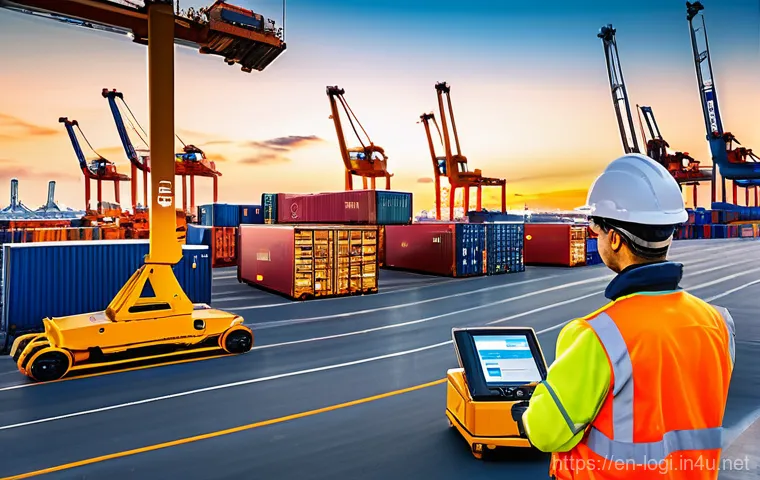
The real magic happens when humans and robots work together. Instead of robots taking jobs, they’re augmenting human capabilities. Imagine a scenario where an AMR brings shelves directly to a human picker, who then focuses on identifying and carefully selecting items, ensuring accuracy and handling delicate products.
This collaborative approach boosts productivity significantly. I’ve heard stories from warehouse managers about how their teams, once burdened with exhaustive physical tasks, now feel more engaged and less tired at the end of the day.
Collaborative robots (cobots) are designed with safety features that allow them to work side-by-side with people without cages, sensing human presence and adapting their movements.
This creates a flexible, scalable workforce that can handle demand fluctuations, especially during peak seasons, without overstretching human staff. It’s a testament to how technology can truly elevate the human experience in the workplace.
Leveraging Real-Time Data for Unprecedented Visibility
In today’s fast-paced global economy, waiting for weekly reports is like trying to drive by looking in the rearview mirror – it’s just not going to cut it.
That’s why real-time data has emerged as a truly game-changing force in logistics. It’s about having your finger on the pulse of your entire supply chain, getting instantaneous updates that allow for immediate, informed decision-making.
I’ve seen firsthand how this level of visibility transforms reactive operations into proactive powerhouses. Gone are the days of blind spots and guesswork; now, every shipment, every inventory level, and every potential disruption can be monitored and responded to in the blink of an eye.
This isn’t just about efficiency; it’s about building resilience and agility into systems that are constantly tested by global complexities. It genuinely feels like having a crystal ball for your operations, enabling you to navigate challenges and seize opportunities with confidence.
IoT Sensors: The Eyes and Ears of the Supply Chain
The backbone of real-time data is the Internet of Things (IoT). These tiny, intelligent sensors are everywhere: on cargo containers, in warehouses, embedded in vehicles, and even within products themselves.
They are the “eyes and ears” of the supply chain, constantly collecting data on location, temperature, humidity, vibration, and more. My experience tells me that this granular level of data is invaluable.
Imagine tracking a pharmaceutical shipment and knowing its exact temperature every minute of its journey, or monitoring vibration levels to ensure fragile goods aren’t damaged.
This information isn’t just collected; it’s transmitted instantly, allowing logistics managers to react to deviations immediately, preventing costly spoilage or damage.
It’s like having a dedicated scout constantly reporting back from every corner of your operations, providing the vital insights needed for ultimate control.
Blockchain’s Role in Enhancing Transparency and Trust
While IoT provides the data, blockchain technology is stepping up to ensure that this data, and every transaction within the supply chain, is transparent, secure, and absolutely trustworthy.
In an industry often plagued by paper-based processes and information silos, blockchain offers an immutable, distributed ledger that records every step of a product’s journey.
I’ve learned that this significantly reduces the potential for fraud, improves accountability, and dramatically streamlines processes like customs clearance and contract verification.
Think about verifying the origin of goods, ensuring ethical sourcing, or simply having a single, verifiable source of truth for all parties involved in a complex shipment.
It builds a level of trust that was previously hard to achieve. For me, blockchain isn’t just a fancy tech trend; it’s a foundational technology that can bring unprecedented integrity and efficiency to global logistics, fostering collaboration among all stakeholders.
Overcoming Challenges: From Congestion to Workforce Evolution
Let’s be real, while technology is ushering in an incredible era for logistics and maritime, it’s not without its bumps and hurdles. I’ve spoken with countless professionals who still grapple with massive port congestion, ongoing labor shortages, and the pressing need to make operations truly sustainable.
These aren’t abstract problems; they’re daily realities that impact everything from delivery times to consumer prices. However, what truly excites me is seeing how these same technological advancements are actively being deployed to tackle these challenges head-on.
It’s a testament to the ingenuity and resilience of the industry. We’re not just adopting tech for tech’s sake; we’re using it to solve real-world problems that have long plagued global supply chains, building a future that’s not only more efficient but also more robust and adaptable to unforeseen events.
Addressing Port Congestion and Bottlenecks
Port congestion has been a recurring nightmare for global trade, causing massive delays and skyrocketing costs. I’ve seen the ripple effect of just one congested port on entire supply chains.
But here’s where innovation is really making a difference. AI-powered predictive analytics, for example, helps ports anticipate vessel arrivals and manage berth allocation much more efficiently, avoiding pile-ups before they even happen.
Digital twin technology allows port authorities to simulate different operational strategies to optimize traffic flow and resource deployment. Moreover, improved real-time communication between vessels, ports, and inland logistics partners means better coordination, ensuring trucks are ready when cargo is discharged, minimizing yard congestion.
It’s a complex dance, but technology is providing the choreography, turning chaotic situations into smooth, synchronized operations.
Evolving the Workforce for a Tech-Driven Future
The conversation around technology often sparks concerns about job displacement, and it’s a valid point we need to address honestly. However, my experience suggests that in logistics and maritime, it’s more about job evolution than outright replacement.
Yes, robots are taking over repetitive and physically demanding tasks, but this creates a demand for new skills: people to program, monitor, and maintain these sophisticated systems.
We need data analysts to interpret the influx of real-time information, and cybersecurity experts to protect our digital infrastructure. Training and upskilling the existing workforce is paramount.
I’ve witnessed companies investing heavily in teaching their employees how to work alongside robots and utilize new digital tools, transforming them into “super-operators” with enhanced capabilities.
It’s about leveraging human ingenuity where it matters most – in problem-solving, strategic decision-making, and adapting to the unexpected, while letting technology handle the heavy lifting and routine operations.
Predictive Maintenance: Keeping Fleets Moving Smoothly
There’s nothing quite as frustrating, or as costly, as an unexpected breakdown in the logistics world. A ship stranded at sea or a critical piece of port equipment failing can trigger a domino effect of delays, missed deadlines, and financial losses that quickly snowball.
That’s why, when I first started seeing the widespread adoption of predictive maintenance, I knew it was a game-changer. It’s moving beyond the old “fix it when it breaks” mentality to a far smarter, more proactive approach.
Instead of adhering to rigid maintenance schedules that might be too early or too late, predictive maintenance uses data to tell us exactly when a machine needs attention.
This isn’t just about saving money on repairs; it’s about ensuring continuous operation, preventing those critical disruptions, and providing a level of reliability that was once impossible.
It truly is one of those innovations that you just wonder how we ever managed without.
Leveraging Sensor Data for Equipment Health
At the heart of predictive maintenance are countless sensors – the unsung heroes of modern logistics. These tiny devices are attached to everything from ship engines and propulsion systems to cranes and conveyor belts in warehouses.
They continuously collect data on performance, vibration, temperature, pressure, and fluid levels. It’s like giving every piece of equipment its own vital signs monitor.
I’ve talked to fleet managers who can now monitor the health of their vessels from thousands of miles away, receiving real-time alerts if any parameters fall outside the norm.
This incredible stream of data, analyzed by AI algorithms, can detect subtle changes that signal impending failure long before a human technician ever could.
It allows maintenance teams to act preventively, replacing a worn part during scheduled downtime rather than dealing with an emergency repair that halts operations.
It’s about optimizing uptime and extending the lifespan of expensive assets, saving millions in the long run.
AI-Driven Maintenance Scheduling and Inventory
Once the sensors provide the raw data, AI takes over, processing this information to predict exactly *when* maintenance is needed. It’s not just “if” but “when and how urgently.” This allows for highly optimized maintenance schedules, ensuring that necessary work is done during periods of low operational demand or while equipment is already stationary.
Even better, AI can help manage the inventory of spare parts. By knowing precisely which parts are likely to fail and when, logistics providers can ensure they have the right components on hand, avoiding costly delays waiting for replacements.
I’ve seen this dramatically reduce warehousing costs for spare parts and improve the overall efficiency of maintenance operations. This intelligent approach, driven by AI, transforms maintenance from a necessary evil into a finely tuned, highly efficient process that directly contributes to the smooth flow of goods.
| Key Technologies Driving Logistics & Maritime Transformation | Impact on Industry |
|---|---|
| Artificial Intelligence (AI) & Machine Learning (ML) | Enhances demand forecasting, optimizes routes and freight, enables predictive analytics, and automates complex tasks. Reduces costs and improves decision-making. |
| Internet of Things (IoT) & Sensors | Provides real-time tracking of cargo and assets, monitors conditions (temperature, humidity), facilitates smart warehousing, and enables predictive maintenance. Increases visibility and reduces waste. |
| Blockchain Technology | Ensures transparency, security, and traceability across supply chains. Reduces fraud, streamlines documentation, and builds trust among stakeholders. |
| Automation & Robotics | Automates repetitive tasks in warehouses and ports (e.g., picking, packing, material transport, crane operations). Improves efficiency, safety, and productivity. |
| Digital Twins | Creates virtual replicas of physical assets (ships, ports) for real-time monitoring, performance optimization, and predictive maintenance. Reduces downtime and enhances strategic planning. |
Wrapping Things Up
As we’ve journeyed through the incredible advancements shaping the future of logistics and maritime, I hope you feel as energized and optimistic as I do. It’s truly astounding to see how rapidly these industries are embracing innovation, moving from traditional practices to a landscape dominated by smart technologies. From autonomous vessels charting their own course to AI-driven predictive maintenance keeping our global arteries flowing smoothly, it’s clear that we’re witnessing a paradigm shift. This isn’t just about making things a little bit better; it’s about fundamentally redesigning the way goods move around our planet, building systems that are not only more efficient and cost-effective but also remarkably resilient and sustainable. The human ingenuity at play here, driving these changes and adapting to new ways of working, is what truly excites me the most.
Smart Logistics: Insights for the Curious
1. Embrace the Data Revolution: In my experience, the biggest game-changer across the board is data. Whether it’s IoT sensors on cargo, real-time tracking of vessels, or predictive analytics for equipment health, understanding and leveraging data is paramount. Companies that truly harness this influx of information aren’t just reacting to problems; they’re anticipating them, optimizing every single step of their supply chain. It’s about moving from guesswork to informed decision-making, which honestly, makes all the difference in a volatile global market. I’ve seen firsthand how a well-implemented data strategy can cut costs and improve delivery times, giving businesses a real competitive edge that feels almost unfair at times.
2. Sustainability Isn’t Just a Buzzword: For years, environmental concerns in shipping felt like a distant issue, but I can tell you now, it’s front and center. From the push for alternative fuels like hydrogen and ammonia to the development of eco-friendly vessel designs, the industry is making genuine strides towards a greener future. What I’ve learned is that beyond the regulatory pressures, many companies are finding that sustainable practices, like optimizing routes for fuel efficiency, actually lead to significant long-term cost savings. It’s a win-win situation where doing good for the planet also makes good business sense, something I’m incredibly passionate about.
3. Cybersecurity is Your New Frontier: With every brilliant technological leap, there’s a new vulnerability. As logistics networks become more digital and interconnected, the threat of cyberattacks becomes very real. I’ve had conversations with port officials who emphasize that cybersecurity isn’t an option; it’s a critical investment, protecting everything from cargo manifests to operational control systems. Think of it as the digital fortress guarding our physical goods. Ignoring it could lead to catastrophic disruptions and financial losses. It’s crucial to invest in robust defenses and, just as importantly, to educate every single person in the supply chain about the importance of vigilance.
4. Human-Robot Collaboration is the Future: Forget the fear of robots replacing all jobs. What I’m seeing is a much more collaborative and empowering future. Automated Guided Vehicles (AGVs) and cobots are taking over the repetitive, strenuous, and dangerous tasks, freeing up human workers to focus on more complex problem-solving, quality control, and strategic decision-making. This synergy creates a safer, more efficient, and often more fulfilling work environment. It’s not about machines versus humans; it’s about intelligent machines augmenting human capabilities, allowing us to achieve things we couldn’t before and making our workplaces genuinely smarter.
5. Continuous Learning is Non-Negotiable: The pace of change in logistics and maritime technology is breathtaking. What was cutting-edge last year might be standard practice next year. From my perspective, staying curious and committed to continuous learning is absolutely essential for anyone involved in these sectors. This applies to both individuals and organizations. Investing in upskilling your workforce for new digital tools, understanding the nuances of AI, or keeping abreast of the latest cybersecurity threats isn’t just good practice; it’s vital for staying competitive and relevant in this incredibly dynamic environment. It’s truly a journey of constant discovery.
My Final Thoughts: Navigating the Future
Reflecting on everything we’ve covered, it’s clear that the logistics and maritime industries are in the midst of an exhilarating transformation. The adoption of smart technologies like AI, IoT, automation, and blockchain isn’t just about incremental improvements; it’s about fundamentally rethinking how global trade operates. We’re moving towards a future where supply chains are not only more efficient and transparent but also significantly more resilient to the unpredictable challenges our world often throws at us. What truly resonates with me is how this shift is enhancing human potential, freeing us from arduous tasks and empowering us to make more strategic, impactful decisions. While challenges like cybersecurity and workforce adaptation remain, the collective drive towards innovation, sustainability, and unparalleled efficiency is undeniably inspiring. It’s a compelling journey that promises a more connected, responsive, and robust global economy for everyone.
Frequently Asked Questions (FAQ) 📖
Q: What are the most impactful technological advancements currently reshaping the logistics and maritime industries, and how are they changing things on the ground?
A: Oh, this is such a fantastic question, and one I get asked all the time! From my vantage point, having watched this industry evolve so rapidly, the absolute game-changers are undeniably Artificial Intelligence (AI), advanced automation, and real-time data analytics.
When I first started diving deep into logistics, these were just concepts, but now? They’re actively revolutionizing everything. I’ve personally witnessed how AI is transforming route optimization, predicting potential disruptions before they even happen, which means fewer delays and smoother journeys for goods.
Automation, from robotic warehouses to soon-to-be autonomous vessels, is tackling labor shortages head-on and boosting efficiency beyond anything we thought possible.
And real-time data? It’s like having a crystal ball, giving everyone involved a clear, transparent view of the entire supply chain. This isn’t just theory; I’ve seen how a company can literally track a single package from a factory floor in Asia all the way to a customer’s doorstep in the US, adjusting on the fly to unexpected events.
It’s creating a level of agility and responsiveness that was unimaginable just a few years ago.
Q: Beyond the buzzwords, how are these new technologies actually tackling critical challenges like port congestion, labor shortages, and the pressing need for greater sustainability?
A: This is where the rubber truly meets the road, isn’t it? It’s easy to talk about “innovation,” but seeing it solve real-world problems is what gets me truly excited.
Take port congestion, for instance. I’ve seen firsthand how AI-powered predictive analytics are optimizing vessel schedules and cargo handling, drastically reducing wait times.
It’s not just about moving ships faster; it’s about making smarter decisions to keep the entire ecosystem flowing. For labor shortages, automation is a lifesaver.
While it might sound intimidating, what I’ve found is that robots aren’t replacing humans; they’re augmenting them, taking on the repetitive, physically demanding tasks, allowing human workers to focus on more complex, value-added roles.
This creates a safer, more efficient work environment. And sustainability? That’s a huge one close to my heart.
Green technologies, optimized routing (again, thanks AI!), and even electric port equipment are significantly slashing carbon emissions. I remember talking to a port manager who told me they’d reduced their fuel consumption by 15% just by implementing smarter AI-driven routing for their internal logistics.
It’s a powerful combination of efficiency and environmental responsibility.
Q: What does this radical transformation mean for the future of businesses and consumers involved in global trade, and what should we be looking out for?
A: This is probably the most fascinating aspect of all this change – the ripple effect it has on everyone! For businesses, this transformation is all about building unprecedented resilience and transparency into their supply chains.
I’ve spoken with countless business owners who were once at the mercy of unpredictable global events, but now, with advanced tracking and predictive capabilities, they can navigate disruptions with much greater confidence.
It means fewer stockouts, more reliable delivery times, and ultimately, a stronger bottom line. For us, as consumers, this translates directly into a better experience.
Think faster delivery, more accurate tracking updates, and a wider array of products available globally at competitive prices. I’ve noticed a huge improvement in how quickly things arrive, especially from international sellers, and that’s a direct result of these logistical advancements.
What should we look out for? Definitely more autonomous operations, from fully automated container terminals to potentially self-navigating cargo ships.
Also, keep an eye on even deeper integration of blockchain for hyper-transparency and enhanced cybersecurity measures, as data becomes even more critical.
The future isn’t just efficient; it’s robust, secure, and incredibly interconnected!